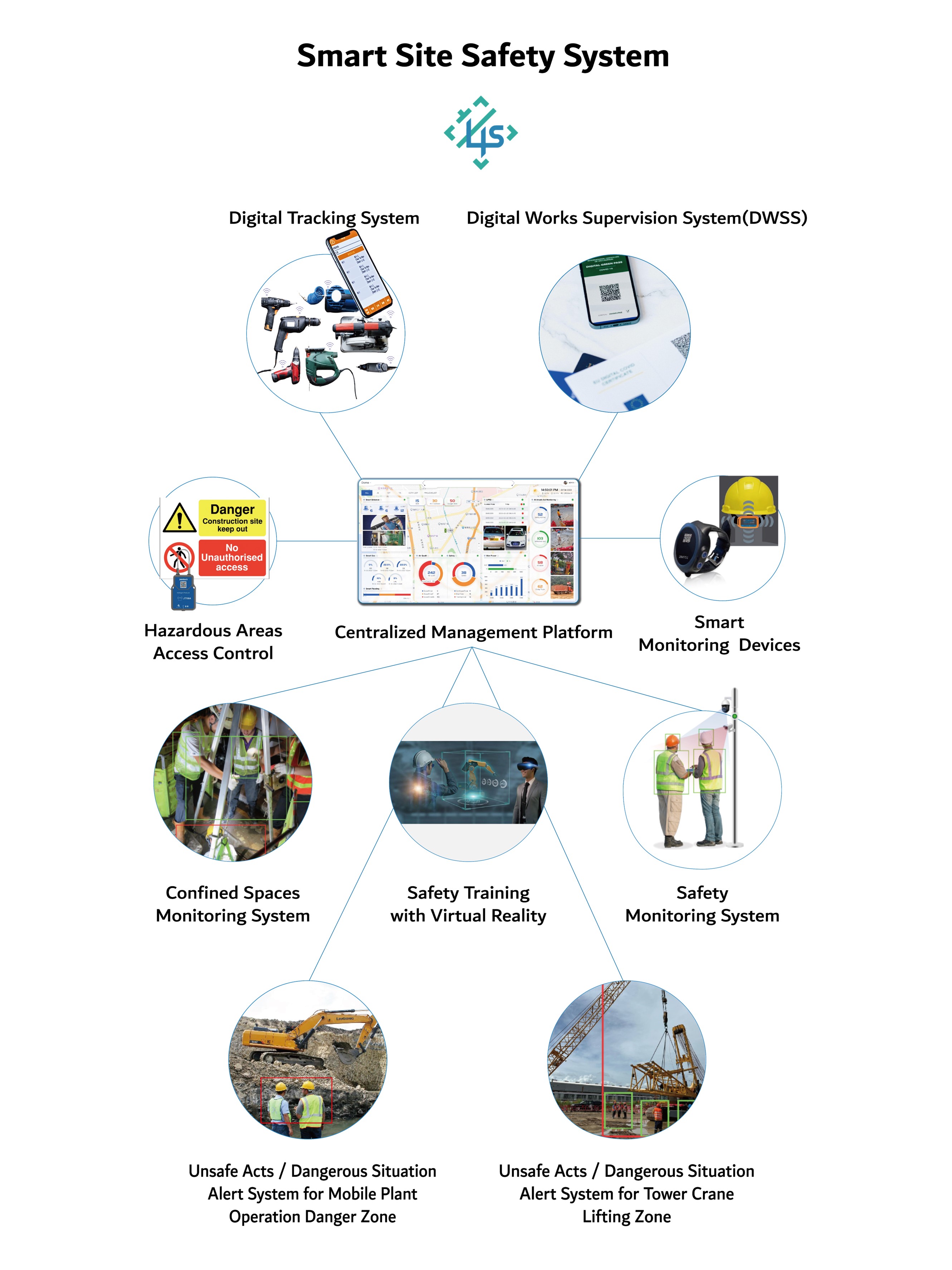
Occupational safety in the construction industry has entered a digital transformation era. Driven by strict regulatory benchmarks and advanced IoT capabilities, the Smart Site Safety System (4S)—also known as SSSS—is converting traditional construction sites into proactive, data-driven environments.
By adopting smart site safety infrastructure, contractors and developers can satisfy statutory requirements, protect site personnel, and establish a high-standard ESG corporate profile.
In 2023, the Works Branch of the Development Bureau (DEVB) of the HKSAR Government issued Technical Circular (Works) No. 3/2023, implementing 4S mandatory for public works contracts with an estimated sum exceeding HK$30 million.
To accelerate adoption across the private sector, the DEVB partnered with the Construction Industry Council (CIC) to launch the Smart Site Safety System Labelling Scheme (4SLS). Under this scheme, sites verified as properly utilizing 4S technology receive official labels and site plaques, establishing an identifiable safety standard across Hong Kong.

Uplift On-Site Safety Performance: Real-time hazard identification and automated alerts prevent accidents during high-risk operations such as lifting, confined space work, and heavy machinery movement.
Encourage Industry-Wide Technology Adoption: Displaying the 4S label sets a visual benchmark, encouraging subcontractors, workers, and peer developers to embrace digital safety standards.
Formal Recognition for Developers & Main Contractors: Serves as official validation from DEVB and CIC that a site meets rigorous, audited technological safety criteria.
Enhanced Corporate Image & ESG Standing: Demonstrates proactive Environmental, Social, and Governance (ESG) commitment, boosting reputation among project stakeholders, investors, and regulatory bodies.
A fully compliant 4S framework relies on a connected architecture spanning 10 fundamental technology categories defined by the CIC and DEVB: